
The Uncomfortable Number
"Am I saving enough?"
This is a question even the most disciplined investors ask themselves from time to time. And while a financial plan can go a long way towards answering this question, there's always the unknown unknowns we cannot factor in.
Educated investors understand the logic well enough. By putting money away today and letting it grow, we will enjoy the benefits later. While there's no mystery around this concept, the big question becomes whether we are putting aside enough money for our "future self", someone who feels like a complete stranger to us right now.
If you're already saving, that's great. But if it feels perfectly comfortable, there's a reasonable chance it's not enough.
In many cases, we've seen that the amount that actually builds real wealth is the amount that feels slightly uncomfortable on an ongoing basis.
The Negotiation You're Always Having
Every financial decision you make is really a negotiation between two versions of yourself. While "present you" wants ease and comfort, "future you" needs you to stretch and make a little sacrifice.
We know from both research and practical experience that we naturally overvalue what feels good right now while discounting what we'll need decades from now. It's why the contribution amount that feels right often isn't. We set it based on today's comfort and desires rather than our future well-being.
The slightly uncomfortable savings amount is where these two versions of you meet in the middle. It's the number where "present you" feels a genuine pinch. This may mean pausing before you pay for that holiday or making the deposit on a new car. Sometimes, discipline means saying no more often than you'd like.
That tension may be a sign that you are doing the real work of building wealth.
More Than A Number
The personal finance world loves percentages. Many investors will know the general advice to save 15%, and if you started late, maybe 20% of your net income.
But your life goes beyond rules of thumb, and while they are a brilliant way to get the average investor onto the right path, true financial planning should incorporate real numbers based on your own unique circumstances and goals.
However, we think that this topic goes beyond numbers. Your correct savings number is better understood as a feeling. You need to be able to sustain it month after month, but it also requires intention and occasional sacrifice. That's the sweet spot. If it feels easy, you're probably selling your “future self” short. If it feels impossible, you'll abandon ship at the first unexpected expense.
Somewhere in the middle, right between where it feels like a pinch and where it feels impossible, is most often the right answer.
We think this mental model carries over into other topics, too.
Your emergency fund should probably feel slightly larger than strictly necessary. Cutting back spending works best when there's some friction to it. Even career moves that lead to higher earnings usually feel uncomfortable before they pay off.
An Ongoing Challenge
As life evolves, so should your number. Every pay increase is an opportunity to widen the gap between what you earn and what you spend, and annual nudges that push you gently back into that discomfort zone will keep your "future self" on track
In summary, being easy on your "present self" harms your "future self". We encourage you to aim for some discomfort now so that you can enjoy significant comfort later. That's the trade-off, but we think the sacrifice will be worth it in the long run.
Our job is to continually push you into this discomfort zone so that your "future self" can enjoy the comfort you crave.

Published 11.03.2026
Navigating The 2025 Budget
As we approached the 2025 Budget Statement, speculation was rife about how Chancellor Reeves would increase the tax intake without breaking the Labour Party manifesto.
Headlines predicted sweeping changes to capital gains tax, pensions, and more. Our advice was simple: wait for facts, don’t act on rumours.
As per last year’s mania, we encouraged clients to take a “wait and see” approach. That patience has been rewarded.
The Chancellor delivered no changes to capital gains tax or VAT, and no substantial pension reforms. For clients who resisted the urge to make hasty decisions based on speculation, this is welcome news. The big changes many feared simply didn't arrive.
What did arrive were smaller, targeted adjustments aimed at increasing tax collection over time. None of these changes should force anyone into rushed decisions. Let's look at the main announcements.
Tax Thresholds Extended
The freeze on income tax thresholds will now continue until 2031, three years longer than previously planned. This means any pay rise could push more of your income into a higher tax bracket. This "fiscal drag" has been with us for some time and will now be with us for longer.
High-Value Property Council Tax (Mansion Tax)
From April 2028, homes in England valued at £2 million or more will face a council tax surcharge. The surcharge will range from £2,500 for properties valued between £2 million and £2.5 million, up to £7,500 for properties valued at £5 million or more. This will require revaluations of properties in the top council tax bands for the first time since 1991. Around 100,000 properties will be affected, primarily in London and the South East.
Cash ISA Allowance Reduced
From April 2027, the annual cash ISA allowance for those under 65 will fall from £20,000 to £12,000. The government's stated aim is to encourage more investment in growth assets. For most of our clients, this aligns with what we already recommend. Growth assets remain the most reliable way to build long-term wealth and outpace inflation.
Salary Sacrifice Pension Cap
From April 2029, a £2,000 annual cap will apply to pension contributions made through salary sacrifice arrangements. This affects around a third of private sector employees who currently benefit from national insurance savings through these schemes. Income tax relief on pension contributions remains unchanged, but this will reduce the incentive for some earners. The impact will vary depending on your specific circumstances.
Dividend Tax
From April 2026, dividend tax rates will increase by two percentage points for most taxpayers. The basic rate rises to 10.75% and the higher rate to 35.75%. The additional rate remains unchanged at 39.35%. For clients who receive dividend income from investments or business interests, this should be factored into your planning.
Property and Savings Income Tax
Tax rates on property income and savings income will increase by two percentage points from April 2027. The new rates will be 22%, 42%, and 47% for basic, higher, and additional rate taxpayers, respectively.
Electric Vehicle Road Pricing
As fuel duty revenues decline with the shift away from petrol and diesel vehicles, the government is looking to replace that income. From 2028, electric and hybrid vehicle drivers will face new charges for using the roads. This will be a per-mile charge in addition to existing road taxes.
The Value of Waiting
On a positive note, the state pension will rise by 4.8% in April, in line with average wage growth. Regulated rail fares in England will be frozen until March 2027, and fuel duty remains frozen until September 2026. These won't transform anyone's financial plan, but they're worth knowing about.
Looking back at the speculation from recent weeks, much of it missed the mark. Those who made significant changes based on rumoured CGT increases or pension overhauls would now be reconsidering those decisions. This is why we advocate patience. Facts beat speculation (almost) every time.
The changes announced are manageable. Most are phased in over the coming years, giving us time to plan thoughtfully rather than react hastily.
As always, every client's situation is different. Some of these changes will affect you more than others. At our next meeting, we'll discuss what this means for your specific circumstances and whether any adjustments make sense.
If you have immediate questions, please get in touch. We're here to help you navigate these changes with clarity and confidence.

Published 26.11.2025
Your Year-End Financial Checklist
As November arrives and the year begins its final act, thoughtful investors turn their attention to a different kind of preparation. While others are distracted by holiday planning and Black Friday sales, the financially literate consider whether there’s anything that needs tidying up in their financial life.
Most of the heavy lifting in financial planning happens in the big decisions you've likely already made. These small year-end actions separate good investors from great ones. They're the compound interest of good habits, the quiet discipline that results in peace of mind and financial security.
Before the year-end rush begins, here are five practical steps that deserve your attention in November.
Five Moves That Matter
The best investors know that great planning isn't built in dramatic moments but in consistent, thoughtful actions. Here are five year-end actions you can take to give you peace of mind during the holidays and help you to start 2026 on the right foot.
1. Review your insurance and beneficiaries.
November is the perfect time to check all your policies and accounts. The beneficiaries you named five years ago might not reflect your current wishes. On the slight chance that the insurer has made an administrative error, you’ll catch that too. This ten-minute review could save your family the headache of discovering an incorrect beneficiary nomination at claim stage.
2. Get your paperwork in order.
Nobody likes thinking about worst-case scenarios. Having your affairs in order brings peace of mind. Is your will current? Do your loved ones know where to find important documents? Think of this as creating a roadmap for those who might need it. Organisation today prevents chaos tomorrow. One afternoon of sorting could be the greatest gift you give your family.
3. Review your monthly subscriptions and debit orders.
Those small monthly payments have a sneaky way of multiplying. The streaming service you tried once, the gym membership you keep meaning to use, the insurance for the phone you replaced last year. Run through your bank statements and cancel what you're not using. You might be surprised how much you free up for next year's goals. Every pound saved is a pound that can work harder elsewhere.
4. Plan for major expenses.
Look ahead to 2026. What's coming that you already know about? A new car, home repairs, that memorable anniversary trip, university fees? Identifying these expenses now allows you to prepare properly rather than scrambling later. Set up a separate savings pot for each major expense. When the time comes, you'll pay with satisfaction rather than stress.
5. That one thing you've been avoiding.
You know what it is. It could be consolidating old pension pots, setting up that trust, or having the money conversation with your adult children. Whatever you've been putting off, November is your permission slip to tackle it. The relief you'll feel heading into the new year will far outweigh the discomfort of dealing with it now.
Small Actions, Big Impact
You don't need to tackle everything at once. Completing two or three of these items puts you ahead of most investors who let the year slip away without review. Choose the ones that resonate with your current situation and start there.
The fact that you're thinking about these matters while others are thinking only about Christmas lunch and shopping says something important about your financial maturity. You understand that small actions compound into significant results.
The financially literate don't need perfect execution. They need consistent attention to what matters. If you'd like help working through any of these year-end considerations, we're here to guide you.
Published 05.11.2025
2025 Budget Speculations
Here we go again.
After much speculation about what would be included in last year’s 2024 Budget, recent reports suggest significant changes await us in this year’s Budget.
If you accept what’s written as truth, the changes could affect anything from capital gains tax, inheritance tax, pensions and maybe even ISAs.
While investors are left wondering whether they should act now or wait, the good news is we’ve been here before. Last year, we faced similar uncertainty and widespread speculation about dramatic pension reforms, inheritance tax overhauls, and sweeping allowance reductions.
Our guidance was simple: wait for facts, not speculation.
How did that work out? Some feared changes didn't materialise, and others were less dramatic than predicted. Capital gains tax rates increased from 10%/20% to 18%/24%. Stamp duty surcharges increased from 3% to 5%. But the biggest actual change - pensions entering inheritance tax from 2027 - wasn't even widely predicted.
Investors who refrained from making quick decisions based on speculation experienced different outcomes than those who reacted to every rumour
This Year's Speculation
Current reports suggest the Treasury will be looking to find an extra £30 billion in tax rises.
The chancellor will be incentivised not to breach any manifesto pledges, and therefore income tax, VAT, and National Insurance appear to be safe from reforms.
This leaves room to generate the necessary revenue through adjustments to capital gains tax rates, pension reforms, changes to inheritance tax rules, restructuring of the ISA allowance, and various property tax adjustments. However, even this narrowed-down list does not provide enough information to base any firm recommendations on.
The same problem, therefore, remains. We don't know the details, timing, or even whether these changes will happen. Speculation often misses the mark while creating unnecessary anxiety. Political and economic realities change quickly.
Why "Wait and See" Is Still Sensible
Last year proved that reacting to speculation rather than facts typically leads to poor decisions. Waiting for official announcements means you can base decisions on actual proposals, understand the real impact on your situation, and avoid unnecessary complications.
For now, our recommendation is to focus on what you can control. Review your current arrangements to ensure you're using existing allowances and reliefs. Above all, we suggest avoiding significant changes based solely on media rumours.
Last year's patience served our clients well. This year, despite more intense speculation, the same principle applies.
When the budget is announced, we'll have facts to work with. Until then, patience beats panic, and facts beat speculation.
Published 13.10.2025
It's Never Too Late to Get Your Finances in Shape
Have you ever looked at your financial situation and felt that familiar knot in your stomach? Maybe you've been putting off organising those scattered investment accounts, or you know your savings rate (the amount you invest each month) isn't where it should be. Perhaps you've glanced at a friend's retirement balance and wondered how you fell so far behind.
If this sounds familiar, you're not alone. We see this every day in our business. The good news is that it's never too late to improve your financial position. No matter where you are right now, a few focused improvements can transform your situation faster than you might imagine.
Getting in Shape
We suggest that you approach financial fitness the same way you'd approach physical fitness. You wouldn't expect to go from sitting on the couch to running a marathon overnight. That would be unrealistic and probably leave you injured or discouraged.
Instead, you'd start with small, manageable steps. You’d start with a 10-minute walk around the block. Then 15 minutes. Then, you’d add some stretching. Before long, those small actions compound into something significant.
Your finances work precisely the same way. The goal isn't to become perfect overnight. The goal is to start moving in the right direction and stay consistent. Small steps compound quickly when you stick with them. We make starting harder in our minds than it needs to be.
Keep Moving Forward
Sometimes work demands everything you have. Sometimes family needs take priority. Sometimes you're dealing with health issues or other challenges that push financial planning to the back burner.
That's completely normal. However, just because you've fallen behind doesn't mean you're stuck there permanently.
Fortunately, you don't need to overhaul your entire financial life in one weekend. You need to take the next right step. Even small actions create forward movement.
Remember, slow progress beats no progress every time. The person who saves an extra £50 per month for five years will be in a dramatically different position than the person who kept meaning to "get organised" but never started.
Your Seasons of Improvement
We see a common pattern with our clients. They make a few improvements, let those changes settle in, then tackle the next area.
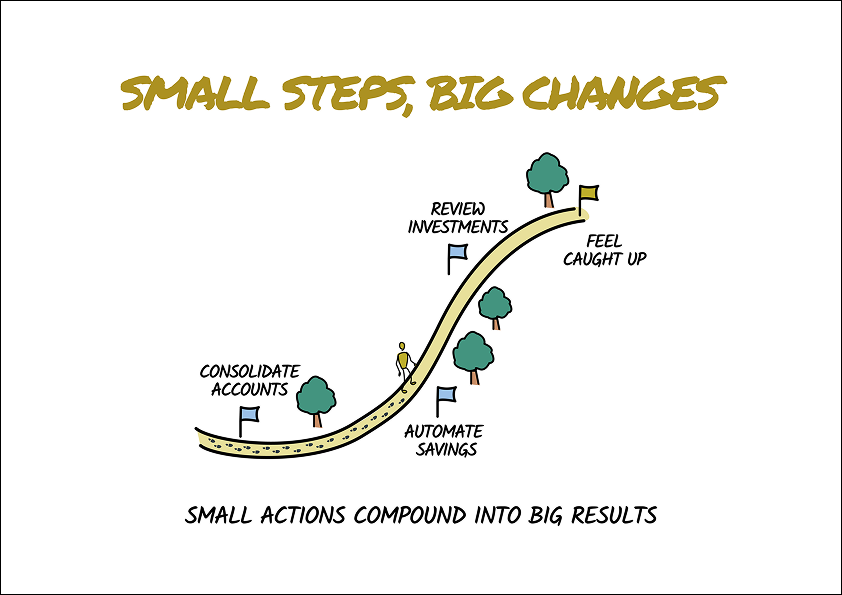
You might start by consolidating those old pension accounts scattered across previous employers. This simple step often reduces fees and makes your investments easier to monitor. Once that's organised, you might increase your monthly savings by setting up an automatic transfer. After that becomes routine, perhaps you review your investment allocation.
These aren't dramatic changes, but they add up quickly. When you consolidate accounts and create clear systems, you gain mental clarity. You start to feel "caught up" rather than constantly behind. This confidence often motivates further improvements.
Your Journey Forward
We've learned from working with many families that a few short seasons of focused improvement can completely transform your financial position. We've seen people go from feeling hopeless about retirement to feeling confident about their future, often in just two to three years.
If you're feeling behind or overwhelmed, take heart. Small, consistent actions compound faster than you expect. The next few years could look dramatically different if you start moving forward today.
We're here to guide you through this process. Whether you need help consolidating accounts, increasing your savings rate, or getting organised, we can show you the way forward. The first step is often the hardest, but it's also the most important. Are you ready to take it?
The value of investments and any income from them can fall as well as rise and you may not get back the original amount invested.
Published 01.10.2025